
Dr. Farshid Arbabi - Radiation Oncologist
Log In / Sign UpAppointments

People who have walked this path

These are real interviews with patients and their families, published with their consent. Use the filters to find the experiences closest to your own situation.
He had recovered so well the doctor didn’t recognize him

He had recovered so well the doctor didn’t recognize him

Mr. Allahgholi had recovered so well that at first Dr. Arbabi didn't recognize him! Before treatment he had double vision, had lost his appetite and had no balance; in his words, it was as if his brain wouldn't obey. After surgery and radiotherapy, these symptoms didn't disappear overnight, but over about a year they gradually improved. Now he has come for his annual checkup, with an important piece of advice: the patient's own spirit is a serious part of treatment.
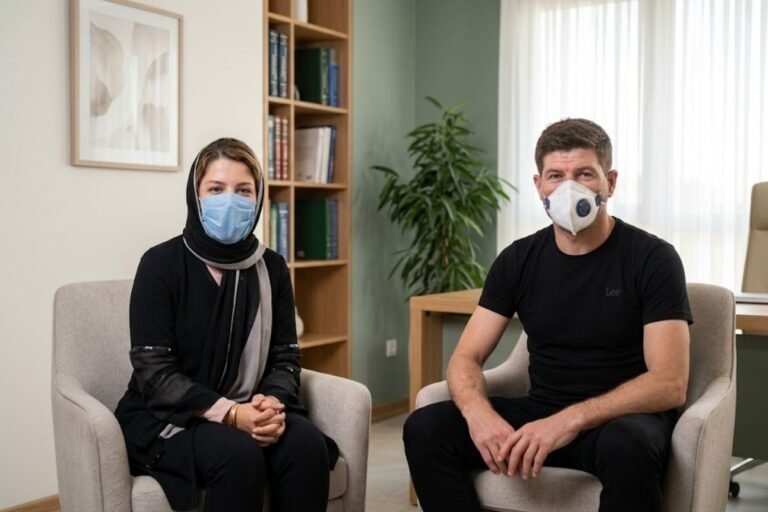
Brain tumorRadiotherapy, Surgery02:46
Four years after glioblastoma

Four years after glioblastoma

Four years ago, when their child was only three, they were diagnosed with glioblastoma, one of the most serious brain tumors. After surgery came radiotherapy and oral chemotherapy. In this video, Dr. Arbabi shows their new MRI: the empty space where the tumor once was and no longer is. The child is now seven, and the worries of those early days have given way to a calm life.
Chemotherapy, Radiotherapy, Surgery01:55
A small sore that went unnoticed for 8 months

A small sore that went unnoticed for 8 months

A very small, simple sore on the tongue. It took eight months for it to be taken seriously, and in that time it grew so much that about 2 centimeters of the tongue were removed in surgery, and the lymph nodes were involved too. Then came radiotherapy and chemotherapy, and now, two months after finishing treatment, they show their tongue to the camera and say they have no dry mouth. Their message to others is clear: don't underestimate a sore that won't heal.
Tongue cancerChemotherapy, Radiotherapy, Surgery02:55
Double vision that went away months after radiation

Double vision that went away months after radiation

They had headaches, and the eye doctor found nothing wrong and sent them to a neurologist; that is when an MRI revealed the problem. Along with the headaches came double vision. They travelled to Tehran from their hometown and had radiotherapy under Dr. Arbabi's care. The hopeful point of this video is that the double vision didn't improve right away, but went away a few months after radiation ended. Now about a year has passed and their MRI is much better.
Brain tumorRadiotherapy01:28
A cold that turned out to be nasopharyngeal cancer

A cold that turned out to be nasopharyngeal cancer

It all began like an ordinary cold, but three days later Mr. Zarafati could no longer breathe. His wife describes how they went to several ear, nose and throat doctors until a biopsy showed nasopharyngeal cancer. Treatment was very hard for him, but the encouragement Dr. Arbabi gave them helped a lot. Now two and a half years have passed, his new MRI is very good, and according to his wife he hasn't had a single symptom since.
Nasopharyngeal cancerChemotherapy, Radiotherapy02:15
When I couldn’t even remember my children’s names

When I couldn’t even remember my children’s names

It started with morning headaches that went away with a pill. The MRI showed a brain tumor, and after surgery and radiotherapy came a few very hard months: words wouldn't come, not even their children's names, and their white blood cells dropped so low that injections were needed for a while. But with patience, medication and regular follow-up, they gradually recovered. Dr. Arbabi recorded this video for people facing the same side effects after radiation, so they know this period can slowly improve with the right treatment.
Brain tumorChemotherapy, Radiotherapy, Surgery03:15
Radiotherapy that wasn’t hard at all

Radiotherapy that wasn’t hard at all

If the radiotherapy sessions themselves frighten you, this video is for you. This patient had acromegaly, meaning a benign tumor in the pituitary gland. Part of the tumor was stuck to a major artery of the brain and couldn't be removed surgically, so that part received 30 sessions of radiotherapy. From the second week the swelling in their body went down, and two weeks after the last session the bone pain was gone. They honestly admit there was some pain, but even without painkillers it was bearable.
Pituitary tumorRadiotherapy, Surgery02:31
Brainstem glioma: four years after despair

Brainstem glioma: four years after despair

In 2016 they came to Dr. Arbabi with a diagnosis of brainstem glioma and double vision, so hopeless that, in their own words, they had given up on life. From the start the doctor told them one simple thing: if you trust me, keep going and listen to me. That is what they did: radiotherapy and then oral chemotherapy. Now, about four years later, they have come in front of the camera themselves to say they are doing well.
Brainstem tumorRadiotherapy00:52
Before you watch
Every patient's experience is unique, and treatment outcomes are not the same for everyone. These videos are published with the patients' written consent and are not a substitute for medical advice.
Log In or Sign Up
Enter your mobile number or email address. A verification code will be sent to whichever you use.
Enter the code
We sent a 6-digit code to:
You are signed in
Go to my dashboard

Appointment Terms and Conditions

Last reviewed: September 2026

Booking an appointment through this system means you have read and fully accept the terms below. Please read this text to the end before paying.


1. Scope of services

Dr. Farshid Arbabi – Radiation Oncologist – treats cancer patients after a definitive diagnosis has been made.

Initial cancer diagnosis is not part of this clinic’s services. If you have not yet received a definitive diagnosis, please complete the diagnostic process with the relevant physician first.

Dr. Shaghayegh Alam – Psychologist – provides counselling and psychological support sessions for patients and their companions. These sessions are not medical treatment and do not replace a visit with the oncologist.

2. Appointment types

Appointment type Who it is for Approximate length
In-person visit – new patient First visit to this clinic 25 to 40 minutes
In-person visit – follow-up and check-up Patients in treatment or after treatment 5 to 15 minutes
Test prescription Test orders for an existing patient Short
Psychological counselling Patient or companion 60 minutes

Choosing the wrong appointment type means the allocated time will not match your actual needs. If this is your first visit, always choose «New patient», even if your file was opened with another physician.

3. Booking and payment

  • Your appointment is confirmed only after online payment is completed. Until then, the selected time is not reserved for you.
  • Payment is made through a secure bank gateway supervised by Shaparak. Your card details are never stored by this website.
  • If money is deducted without an appointment being issued, it is automatically returned to your account within 72 hours at most. Otherwise, please call the clinic.
  • An appointment tracking code is sent to you by text message. Please keep it until your visit.

4. Attending the clinic

  • Please arrive 15 minutes before your appointment so that check-in can be completed.
  • The time on your appointment is your place in the queue, not necessarily the moment you enter the doctor’s room. Because of the nature of these illnesses, a previous patient’s visit may take longer than usual. Thank you for your patience.
  • Arriving more than 15 minutes late may mean losing your appointment; being seen will then depend on the clinic’s discretion and on available time that day.

5. Required documents

For new patients, bringing the following is mandatory:

  • Your complete medical file
  • All test results
  • Pathology and biopsy reports
  • Imaging (CT, MRI, PET scan) together with their reports
  • A list of the medicines you currently take
  • National ID card

Without these documents your file cannot be reviewed properly and the visit will not be useful. If necessary, the doctor may order some tests again to confirm the information.

For follow-up patients, the latest test results and current medicines are enough.

6. Cancelling or rescheduling

  • Up to 24 hours before your appointment you can cancel or reschedule it from your account on the website. In that case the full amount is returned to your account within 3 to 7 working days.
  • Less than 24 hours before, online cancellation is not possible and the payment is not refundable, because that time slot can no longer be offered to another patient.
  • Not attending without prior notice counts as a cancellation and the full amount is lost. After two missed appointments, online booking is blocked for your phone number.

7. Cancellation by the clinic

In unavoidable circumstances (the doctor’s illness, unexpected closure, force majeure) your appointment may be cancelled or rescheduled. You will be notified by text message and the full amount will be returned without any deduction, or, if you prefer, a replacement appointment will be given to you at the earliest opportunity.

8. Privacy and medical information

  • Your identity details and phone number are used only to manage appointments and send notifications, and are not shared with third parties.
  • Your medical information is covered by medical confidentiality and is not disclosed to anyone without your written consent or a legal obligation.
  • Notes you write in the comments field when booking are used only to prepare for your visit.

9. Remote medical advice

This system is only a tool for booking in-person appointments. No treatment advice, test interpretation or prescription is given through the website, text messages or social media. Any replies are general guidance and do not replace a visit.

10. Emergencies

If you are in an emergency situation, such as shortness of breath, bleeding, uncontrolled high fever or reduced consciousness, do not wait for an appointment. Call the emergency number 115 or go to the nearest medical centre.

11. Contact

Address: Mahdad Medical Building, 2nd floor, corner of the second alley, Mir Emad St., Motahari St., Tehran Phone: +98 21 8817 9283 – +98 912 005 3678


The clinic reserves the right to revise these terms. The valid version is the one published on the website at the time you book your appointment.

I accept the terms!